
What It's For
Long, for a shortpost, but still a shortpost and not a longpost.

“In our world,” said Eustace, “a star is a huge ball of flaming gas.”
“Even in your world, my son, that is not what a star is, but only what it is made of.”
Three short anecdotes that seem to me to be connected by the same underlying thread:
I.
Recently, on my Discord server, some friends and I were talking (as you do) about bihacking, i.e. expanding one’s sexuality from exclusively straight or exclusively gay to something more open and flexible.
I have a friend who has previously expressed some very mild dismay about being straight, mainly because ~“it just seems like bisexual is the correct sexuality to have, like why wouldn’t you want to be able to feel romantic toward everybody instead of toward just half of people.”
I offered some more concrete help, because I have some knowledge and experience in this domain, and he demurred, saying something along the lines of:
I haven’t lacked for opportunities for gay exploration, and literally none of the people who propositioned me sparked anything in me. Had they, I probably would have just gone for it.
There was something about this response that seemed slightly confused, or off, and it tickled two other anecdotes.
II.
My spouse Logan has a framework he calls naturalism, and as a part of developing it, he once spent a substantial chunk of time patiently and directly observing a SIM card ejector tool, which is a very very tiny metal object that looks like this:
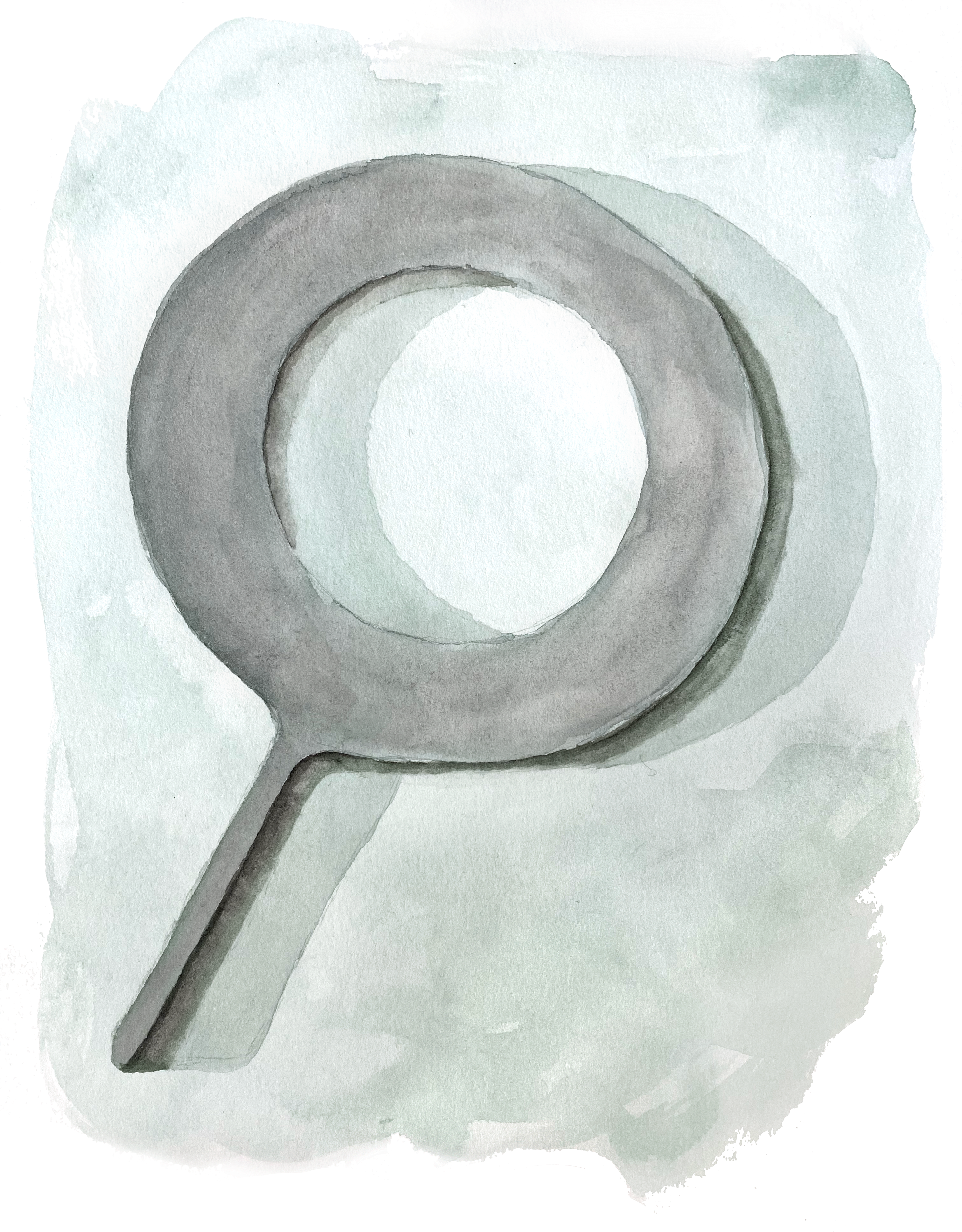
I wrote some things about its shape and color and so forth (it was round and metal, with a pointy bit on one end); and while I noted those perceptions, I tried to name some of the interpretations my mind seemed to be engaging in as I went.
As I identified the interpretations, I deliberately loosened my grip on them:
I notice that what I perceive as ‘shadows’ needn’t be places where the object blocks rays of light; the ‘object’ could be two-dimensional, drawn on a surface with the appropriate areas shaded around it.
I noticed that I kept thinking in terms of what the object is for, so I loosened my grip on the utility of the object, mainly by naming many other possible uses. I imagined inserting the pointy part into soil to sow tiny snapdragon seeds, etching my name on a rock, and poking an air hole in the top of a plastic container so the liquid contents will pour out more smoothly. I’ve actually ended up keeping this SIM card tool on a keychain, not so I can eject SIM trays from phones, but because it’s a great stim; I can tap it like the tip of a pencil, but without leaving dots of graphite on my finger.
I loosened my grip on several preconceptions about how the object behaves, mainly by making and testing concrete predictions, some of which turned out to be wrong. For example, I expected it to taste sharp and “metallic”, but in fact I described the flavor of the surface as “calm, cool, perhaps lightly florid”.
By the time I’d had my fill of this proto-exercise, my relationship to the object had changed substantially. I wrote:
My perceptions that seem related to the object feel very distinct from whatever is out there impinging on my senses. … I was going to simply look at a SIM card tool, and now I want to wrap my soul around this little region of reality, a region that it feels disrespectful to call a ‘SIM card tool’. Why does it feel disrespectful? Because ‘SIM card tool’ is how I use it, and my mind is trained on the distance between how I relate to my perceptions of it, and what it is.
There isn’t any such thing as a “tiger” in the sense that we mentally conceive of tigers, as a distinct and objective category, and there aren’t any SIM card tools, either. It now feels… almost disgusting, to me, to lose sight of that. Disgusting like thinking of trees only as “lumber”, and cutting down entire rainforests as a result.
The third anecdote will hopefully make the connection clear, but if not there’s explanation in IV.
III.
(more “inspired by” than “based on”)
Duncan: “You should try microfusion!”
Dave: “What’s microfusion?”
Duncan: “It’s this dance where you lean into a partner in very close embrace, like often full torso-to-torso contact, and you’re making very very tiny motions, often smaller than an inch, orbits and undulations and pulses of movement. It’s a very intimate, ‘listen-y’ dance, maybe the most connect-y partner dance I know of.”
Dave: “Oh right I’ve heard of that. I never tried it because it … sounded like sex? Basically? And I don’t feel ready or interested in doing that with a bunch of strangers?”
IV.
I think people often confuse something like “what I use X for” or “what X means to me” with “what X is, in a fundamental sense.”
A classic example of this is “children.” Many people have children for reasons, and are somewhat distressed when they later discover that those children are whole people with their own goals and wants and priorities and are not necessarily willing to subordinate themselves to their parents’ desire for a cute little object they can pour love onto, or an impressive child prodigy they can brag about to the neighbors, etc.
People often think that their children are their children, period, in the sense that their children exist to be their children, and that’s … not quite the case.
Similarly: people often identify with their profession, in a way that can be reductive and almost a little bit … demeaning?
“What do you do?” “Oh, I’m a teacher.”
…really? That’s it?
(I mean, most of the time, both parties know and understand that the question being asked is what do you do for work, but there’s still mental slippage here, and it’s encouraged by the language and the distinctions that the language doesn’t bother to track.)
In III, Dave (correctly, I think) noted that microfusion, as described, would land with him as sex. It felt like it would play the same role as sex, and he didn’t need an activity with strangers to fill that space, and so he didn’t want to do microfusion.
I think this is valid on the level of personal choice! But:
Duncan: “It is not, in fact, basically sex, but it can feel like that if one has overwhelmingly gotten their physical intimacy with other people from sex, and nowhere else.”
It’s easy to get mixed up, and not notice that what’s happening is something like “I am interpreting microfusion as being sex-like, and mentally slotting it into a bucket that contains sex (as I understand sex) and very little else,” as opposed to “microfusion is sexual, or objectively sex-adjacent.”
The tiny round piece of metal shaped into a flattened ring with a narrow cylindrical protrusion “is” a SIM card ejector tool, if we want to be loose and approximate with language, and kind of wave our hands and go “c’mon, you know what I mean.”
I do know what you mean.
But I think you might not quite know what you mean, in that the tiny round piece of metal isn’t A SIM CARD EJECTOR TOOL. That’s what we made it for, and that’s how we use it, and that’s what we call it, but what it is is something else entirely.
V.
Looping back around to my unfortunately-according-to-him straight friend.
We chatted a bit, and he decided that bihacking just … wasn’t that high on the list; he has plenty of better things to do and his sadness about being straight is pretty small and unimportant.
Again: valid!
But there’s a confusion in there, in that he was, like.
“Well, as a straight person, when I considered having sex with another male, I didn’t get bright romantic sparkles or hot-fevery-pursuit vibes or the other things I get when I spy an attractive and interested woman. Therefore I guess there’s no benefit to me in bihacking.”
And I’m a little bit ???
The ??? has two parts. One part is that this sounds like “I’ve got an idle interest in learning how to do a backflip, but I checked and I can’t do a backflip so I guess I shouldn’t learn how to do a backflip.”
(Again, it’s actually reasonable that he was just like “nah, not a priority for me, even given my expressed mild dismay.” But something about “I shouldn’t bihack to be attracted to men because when I look at men I don’t feel attraction” felt … slippery.)
The other part is the assumption that sex is for the bright romantic sparkles.
It is! It can be! Just like we can use the tiny round piece of metal to eject SIM cards.
But like (dear friend), if we were in fact embarking on a bihacking project, I would want you to notice that sex can be for play, and sex can be for relaxing, and sex can be meditative, and sex can be luxurious, and sex can be challenging, and sex can be adventurous, and sex can be scary, and sex can be for all sorts of things.
(Analogously, to marriage: “What do you mean your union isn’t even going to solidify diplomatic relations with a powerful rival?”)
Indeed, the main way to lay the groundwork for someday getting the sparkly romantic feelings from a man is to do the other things. If you recognize that you can relax and have an erection and get good feelings and even orgasms out of someone e.g. just giving you a long, luxurious massage, and it doesn’t have to be “about” romance,
this opens the door, so to speak. This lets your body do something like acclimate to producing sexual responses in the absence of a beautiful woman (or in the presence of a not-beautiful-to-you man). And then from there you slowly push the boundaries wherever you want to.
But it starts with something like “ah, right, I had been thinking of sex as being for this one very narrow thing, and that extremely limited my ability to explore and experiment.” It’s sort of like how people in certain extremely orthodox communities sometimes are taught that sex is for procreation and nothing else, and thus have basically zero connection with their own pleasure, or with the romantic bonding that can occur with a partner, etc. etc. etc.
VI.
I harped on bihacking and sexuality a bit because a) that’s what brought the topic to mind, in the first place, and b) because I do have a bit of a Mission, there (to raise the general sanity waterline when it comes to how people think about and talk about sex).
But the real timeless, generalizable lesson has nothing to do with that. It’s the thing that bihacking and the SIM card have in common:
Don’t confuse the use you make of something with what that thing actually is. Some people do martial arts for exercise, others for discipline, others to kill time after school, others to connect with family members who are doing the same activity with them, others because they actually need to defend themselves, still others because they think it would be rad if they could smash bricks with their fists, hell yeah.
None of that is what the martial arts class actually is.
Or, to put it in terms of a “do” rather than a “don’t”:
Maybe take a week and set some phone reminders, or carry some coins in your pocket, or choose a particular doorway, and every time an alarm goes off or you notice the coins or you pass through that doorway, pause and think of one thing out there in the world, and think of three things it could be “for” that aren’t its accustomed use.
Ultimately, those things aren’t even for that. “Forness” lives in our brains; it’s not a fundamental attribute of the objects themselves. But going from one preconception to a handful of possibilities is a solid step on the path to realizing the truth:
I'm really struggling to understand what is different about this sort of naturalist behavior? Like, what would a person who studies a SIM card ejector for its contours do differently, either with the ejector itself or with other objects?
Would they use the SIM card ejector to poke holes in plastic food packaging or potatoes before cooking, instead of a fork? Would they use it to scratch themselves in a hard-to-reach spot? If you have one that fits around your finger, wear it as a ring and spin around the pointy bit? Look through the hole? Use it as a metal conduit if you're out of wires in an apocalypse situation? Would they use a paperclip to eject SIM cards?
Because if so...that doesn't seem like something you need to work on. I do all of those things with random objects all the time. Not specifically SIM card ejectors, but paperclips and washers and taken-apart-mechanical-pencils and the like. It would be significantly more effort to actually think that this particular metal object is exclusively "for" ejecting SIM cards, rather than simply what it is designed to be the best at. Anyone who's stuck thinking about objects in terms of rules could just stop doing that, and it would just mean not putting active effort into it. It doesn't take active effort to stop, that's the default.
If those aren't the sort of things you're trying to do, then I didn't really understand the post and could probably use some more examples.
Once I reoriented to for-ness as a relation and not an inherent property, life became way more fun and less depressing. I guess I could also say that I felt more powerful and less put-upon as well. I really resonated with the quote from Logan feeling disgust at the thought of leaving/denying such an orientation.